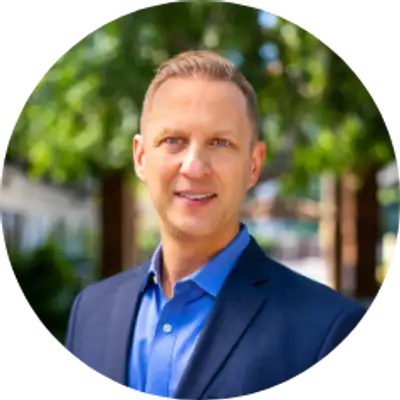
Marc Fecker of Robo | S3 Ep15 | The Garage by Sonatus
Today in The Garage,
we're recording live at AutoTech
Detroit. Our guest today is
Marc Fecker, CEO of Robo.
Robo is an engineering firm
focused on the future of
connected transportation.
In our conversation,
we discussed how Robo
worked with Winnebago
to deliver their new
Winnebago Connect platform.
And this is really interesting
because we often think about
SDVs as passenger vehicles or
perhaps some people think about
them as connected,
transportation heavy trucks.
But RVs also have many of the
same needs and Robo was able to
deliver a solution that adds
value and shows the future of
RVs across their Winnebago
Connect platform.
We also talk about the origins
of Robo and the work they're
doing in the future.
Let's
go!
Welcome to The Garage.
I'm John Heinlein, Chief
Marketing Officer with Sonatus.
We're recording live
at AutoTech Detroit,
and that's the background noise
you may hear as we're recording.
My guest today is Marc
Fecker, CEO of Robo.
Marc, welcome to The Garage.
Thank you.
So it's, first, introduce
yourself and tell us about you.
Sure. So as you mentioned,
Marc Fecker, CEO of Robo.
I, come from, the
world of technology.
I've been a software
developer my whole career.
Started actually developing
in the Internet space back in
1994, if you can imagine.
Fell in love with, the ideas
of connected things and,
have been kind of on the
bleeding edge ever since.
I spent seventeen years at Ford,
the last five of which was
running the innovation lab for
Ford Motor Company and the
dealers creating the future of
automotive retail.
And then, I went back to
school, got my MBA at Michigan,
and, was really excited
to do my own thing.
So I started Robo in 2017.
And, yeah, we're focused on the
future of connected transportation.
And we're an engineering firm
here based in Novi, Michigan.
That's fantastic.
So you got to start us off
with a fun fact about you.
All right. Well, I'd
mentioned Michigan.
So I went to University
of Michigan, and and I'm one,
I believe from what
Michigan has told me,
I'm one of only two people
to have an MBA without an
undergraduate degree.
That's pretty unheard of.
You know, it's something I
didn't even know is possible.
I just went to,
talk to them because
that's what I wanted to do.
You know, that was my
ultimate goal and said,
how can I figure out a way to
do it and not make it a ten
year journey as a, you
know, adult family and kids?
It, was not something I was looking
to go to school full time and,
you know, work full time
for a long period of time.
But, and they said, well,
you know, generally,
we've never really done that
and provided that except for if
you've, you know, run
your own business,
had a bunch of patents.
And they went through
a list of things.
I was like, I've
done all of that.
I'm like and they're like,
oh, well, let's see if we can,
you know, get you in.
And, so yeah.
That's great.
That was a really cool,
cool, cool opportunity.
Fantastic.
So tell us about Robo,
tell us about your company.
Yeah.
So I mentioned we're an
engineering firm here at Novi,
Michigan focused on the
future of But you're local.
You're right here.
We are right here. Yeah.
We are like a mile away.
This is
like a dream setup
for us because, yeah,
we're right down the road.
But, we have a lab here,
where we focus on
all the development.
We focus on transportation,
and we specialize in embedded software
firmware type of capabilities.
We like to say we're we're
software and hardware meet.
That's our specialty.
But we're trying to create the
experiences of the future of
transportation while at the same
time creating the jobs of the future.
That's great.
And, you know, the reason we
wanted to to talk with you,
it turns out you're
exhibiting right next to us.
Your booth is
literally right there.
I know. It's pretty awesome.
And, but you you had such
an interesting story that,
you know, in this podcast,
we talk about vehicle
software technology,
especially how software and and
software defined vehicles can
enable next generation
experiences and capabilities.
And as we were talking,
we we realized that that's
exactly what you're doing with
your solution is you're
showing how, in this case,
for recreational vehicles
in this in this example,
you're able to deliver a kind
of a customized advanced new
experience for this.
So maybe you want to talk about
this project and kind of the
origins of the project and what
you've been able to achieve.
Sure. Yeah. So, we're we're
referring to Winnebago Connect.
So we, Winnebago is one of
our our key clients and,
we help them go from
concept all the way to
productionization.
We're now in market with
five hundred plus vehicles,
in operation and continue to
roll new ones out every day.
But, it really is a
fully connected RV.
I like to say it's everything
connected home and connected
vehicle kind of
mashed up into one.
So integration of all of the
house systems that's, you know,
lighting systems, water
systems, climate management,
energy management, slide outs,
leveling systems, you name it,
all integrated into a
centralized control system.
You have a mobile app where
you can interface with it near
field via Bluetooth or over the
air from anywhere in the world
because the vehicle is
connected and online.
And then there's a lot of
really unique capabilities,
first of their kind
in the RV industry.
Things like we do over the air
software updates to provide new
features and
benefits to consumers
on a regular basis,
quarterly basis.
And then we also off board data
and really put that data into
action to improve the
customer experience.
And, yeah,
and there's so many bells
and whistles I could go into.
But, yeah, that's,
that's really we again,
we brought that from the
beginning all the way to
market and, working with
Winnebago's leadership team.
I think it really all stems
from from their belief in the
opportunity to create a
better experience for their customers
and a and a competitive
advantage, in the marketplace.
But, you know,
it takes that because it
is a when you talk about
digital transformation,
it really is about
organizational transformation.
Right?
In order to to to design, build,
and support a product like that,
it it impacts every
aspect of a business.
And you need to embrace
that and and want that and
have the leadership
really pushing,
that, as a priority
for the organization.
So many interesting points
you made there.
I want to I wanna come back and touch
on a couple of those in succession.
I want to start by
saying, just in fairness,
my fun fact back to you because
I think I wanted to let you get
to your story first is my
parents are big RVers, actually.
Oh, awesome.
Yeah. They're retired.
They
they take their RV
all over the place,
particularly from up in the
northeast to to Florida as well.
Yeah.
So it's, it's close to my heart
that you're you're delivering that
innovation because
I think, definitely,
that's a space that can benefit
from from innovation and
digitalization because not all
of them are these are like that.
So that's really exciting.
You're absolutely correct.
And it's actually, you know,
helping businesses
who are traditionally
non technology and non software
type businesses bring
that capability to bear.
That's that's really what we're
passionate about in helping,
you know, helping
more people do that.
The second thing I was gonna
say is you mentioned, you know,
five hundred units,
and that may seem like a small
number to our listeners who are
thinking about the auto
industry in the millions of
units, but the RV
market is much smaller.
And and you're also rolling out across
their fleet sort of in a rolling basis.
So you expect to be a bigger
portion of their fleet coming up.
Yeah.
Ultimately, the the
the plan is to have,
Winnebago connect in every
Winnebago product, over time.
Exactly the timeline.
I'm not exactly sure.
A lot of that is dependent on
on roadmaps in the marketplace
and things of that nature.
But over the coming
years, that's the intent.
The cool thing about it is
it can take different forms.
If you think about a low
cost, you know, twenty,
dollars twenty five thousand
trailer versus a big half
million dollar Class A vehicle.
These things can be vary in the
types of needs that they have.
But the same system,
the same software running in
all of those vehicles connected
to the ecosystem,
that will be consistent no
matter what product it's in.
And that last point is a super
important thing because we
mentioned that in the context
of the work we do in the in the
industry that software enables
you to make the investments
like you've done
in a in a solution,
but recognize that but
one size doesn't fit all.
You can take that same
foundation and deliver it in a
high end vehicle or
a low end vehicle,
but the underpinnings
are the same.
And I think that's something that
we were just chatting about this,
with another guest yesterday
that it's a really valuable
observation that you don't have
to assume that for software
defined vehicle and software
capabilities necessarily means
high-end vehicle.
Right.
The investment can pay off
across your product line with
differences and with customization
for different price points.
You're absolutely right.
And if you design the the
product as a as a platform,
if you think about, like,
platform-as-a-service, right,
that's the way I view SDV.
Right?
It's it's kind of like,
how how do I make the vehicle
accessible to integrate with it,
how I need to integrate it for
the particular application that
I'm supporting.
And in this case, you
know, that's what we do.
And you design the platform
from the ground up.
That way, it gives you
a lot of flexibility
to support those different
needs for those different
products and
different customers.
You also mentioned that the
platform is modular and you can
add new capabilities.
OTA is a solution we provide
from Sonatus and it's a key
topic in the industry right now.
What are the kinds of things
that you expect to be offering
upgrades over time?
Can you give some
examples perhaps.
Well, maybe maybe I could just talk
about what's happened other than,
because I can't really talk too
much about what's coming next.
But I will say that, so we
launched a year ago and,
one of the features that we
launched just about six months
ago was auto gen start.
So you got a generator on your
vehicle and then you lose power
and you want the generator
automatically kick on.
You can have that capability
now where when you when our
vehicle first rolled off the
line, it didn't have that.
And for consumers, that's great.
One of the cool features
that we have in the Winnebago
Connect product, again,
designed around the customer,
that's really, really important.
That's the key principle in
the driving force inside of
Winnebago is everything
that we do at Winnebago
is all about the customer and trying
to improve the customer experience.
But listening to the customers,
sixty to seventy percent of
them travel with a pet and
they're deathly afraid of
leaving their pet behind while
they go for a hike or need to
run into town to get some food
Because the power fails.
Because the power fails, you
know, you go to a campground,
the the power's unstable.
The temperature can
change so rapidly,
in the vehicle, and pets
don't deal with it, you know,
as well as humans do.
They can't go roll down the
window or let themselves out.
In the Winnebago Connect
product, you can,
turn on PetMinder and it will
control all those things as
well as alert you via text
message if you lose power
connectivity or the
temperature falls out of range.
That's fantastic.
I mean, it's such it's an
example that's, of course,
popular in cars as well.
Yeah.
And the idea that you're be
able to roll that out in your
platform as well is is super.
You mentioned also earlier
that you've had a great
collaborative relationship with
your OEM customer, you know,
Winnebago. Yes.
And and and it takes a village
really to create solutions like this.
Can you talk about, you know,
your relationship with them and
and some of the learnings you
had about that that might even
also benefit others that are
looking to deliver software
projects into OEMs.
Yeah.
And I really think that you just
brought up a really key point there.
Right? It takes a village.
It is not a small effort. I
did not do this on my own.
I'm representing, you know,
probably a couple thousand
people who are involved in
bringing this, to market.
And it takes, as I mentioned,
sponsorship and support
at the leadership level.
And our journey was
really that of, you know,
we had worked prior with,
with an individual who came in
to Winnebago to lead digital
transformation there.
And she was, needed help in
improving the customer experience.
We got involved with that and
did some UX design work and
some support for some of
their existing experiences.
And as they started to move
forward with their strategy and
thinking about how they
could create a differentiated
offering through a connected RV,
it started off being
called Smart RV.
It was something they recognized
myself and my team
could help with.
And, and they
brought us in there.
But, you know, then
it takes, yeah,
building the relationships
with all the different vertical
owners within the business,
with the team that's really
responsible for delivering and
getting them to believe
in the same mission,
in the same direction that
we're trying to move and then
help them along on that journey.
Right.
And so I think if I think
about the journey of bringing
Winnebago Connect
out, there's, yes,
tons of technology
challenges it gets into it.
When you start talking
about integration of an RV,
it's much different than in the
in the auto in the auto world.
In the auto world,
everything is CAN, J1939.
That's the standard.
And every OEM, has
components designed and
developed for them.
In the RV world,
you got to realize it started
off with people in a garage who
wanted to build, you know,
take a trailer and build
a little tent on the back.
And then they started to put
in things they could buy at Lowe's
and, you know, Home Depot or
whatever to assemble a vehicle.
It's
evolved, but not
that significantly.
There's still a lot of
commercial products in there.
And we deal with, you
know, every variant of CAN,
serial interfaces,
wireless interfaces.
We've got to make all of that
work cohesively into one system.
And that's a technical
challenge that is probably
pales into comparison
into the organizational
transformational challenges.
Really, again, getting
everyone to believe,
getting everybody educated,
getting the right people in
the right seats to support,
a solution like this.
And, and that just takes
a little bit of time,
but it takes commitment.
And if you have that
within your organization,
you can to bring together a
solution like Winnebago to connect.
That's great.
I mean, so it sounds like a key,
a key goal is having a champion,
having somebody who's who's driving
for this and pushing it ahead.
And then you mentioned these
diverse connectivity standards,
you know, as you said, vehicles
are somewhat standardized.
But even there, you have a
number of different standards.
One of the things we do is
help to bridge some of those
different standards together.
So it sounds like you've had
some of those same challenges.
So I feel some kinship with
with what you're doing. Yeah.
I actually sit on the, RVC
is the emerging RV CAN standard,
and I sit on that
board within the RVIA.
Very smart. Very smart.
Try to try to move that
forward, get that mature.
Because if we can
get that mature,
it pays off for everybody.
The supplier, the OEMs,
everybody benefits from from,
you know, that work.
So but it's all volunteer
work. All right.
It's extra, extra work,
but it's important work.
Absolutely.
A number of our folks do the
same work with COVESA and the
Trucking Association and a
number of other organizations.
So it's important work.
Yeah.
So pulling back and,
aside from Winnebago,
what other things
is Robo working on?
What are you looking
forward to next?
Yeah. We, so we work with a
number of different companies.
We've worked with Hyundai Translead
on their eighteen wheelers.
We worked with Amazon on their
last mile of delivery and
getting data off the vehicles.
We're working with
a new company.
Very excited to talk
about these guys.
They're, they're called Tripp.
They're just about to launch.
It's a micro mobility company,
with like bike share
program that's launching in Columbus
and Cleveland next year.
And we've done all the embedded,
basically electrical system that,
on the bike, all the,
IoT software firmware
development for that.
And that again connects to
a whole ecosystem and really
trying to improve transportation
and that micro-
mobility offering.
And they've got so many
cool technologies that we're
bringing to bear for them.
That's an exciting
program to talk to.
But this is this show is really our
first time exhibiting our first time.
I like to say it's
our coming out party.
So we're very excited to
be introduced to the world.
We're we're looking for
new clients and, yeah,
excited about helping move the
future of transportation forward.
Well, hey, Marc, thank you
so much for joining us.
This has been a great
conversation and thanks for
being a good
neighbor next to us.
Yeah. No problem.
And and introducing a new
perspective on, you know, RV,
which is a market we haven't
thought as much about.
So it's, it's exciting what
you've been able to achieve.
Congratulations and
good luck in the future.
Thank you so much.
If you like what you're
seeing in this episode,
please like and subscribe
to see more like it,
both from AutoTech Detroit
and also from our home studio.
We look forward to seeing you
again in another episode of The
Garage very soon.
Creators and Guests